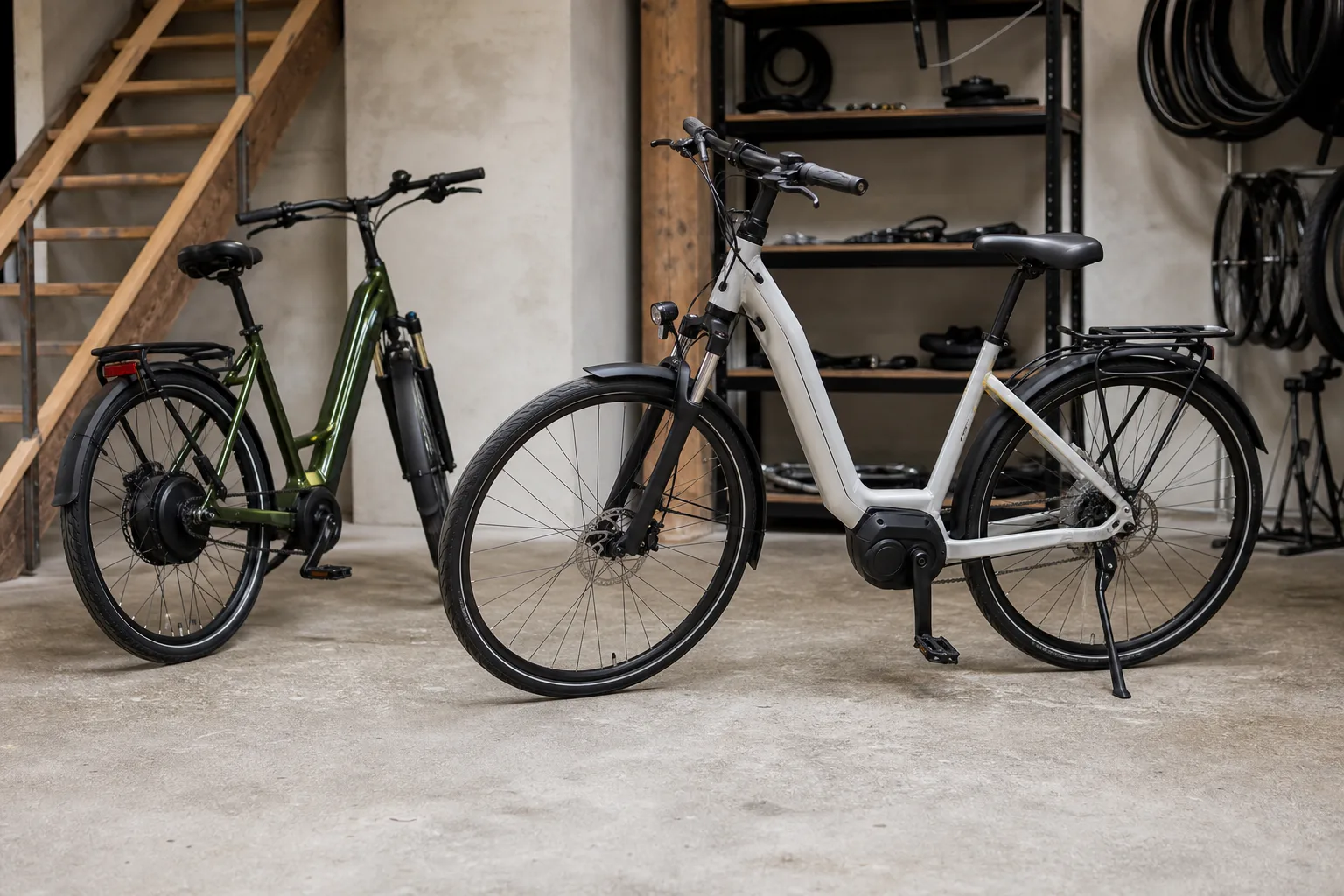
A route with one hard climb on it is a specific engineering problem, not a general one. Most of the miles are flat or rolling, where nearly any electric bike is pleasant, and then there is a block or two of real gradient where the motor either helps in the way you expected or does something else. The decision between a hub motor, which drives the wheel directly from inside the hub shell, and a mid-drive, which puts its power through the chain and the rear cassette, comes down almost entirely to what happens on that short section. Here is what a careful buyer checks, in order.
1. The sensor sets the feel before the motor does
A cadence sensor watches whether the cranks are turning and, past a threshold, tells the controller to supply the assist level you selected. A torque sensor measures how hard you are actually pressing and scales the motor's output to match. On flat ground the difference is mild. On a climb it is not, because a cadence system delivers a fixed block of power that either covers the grade or does not, while a torque system rises and falls with your legs, which feels less like a switch and more like a tailwind. Riders who dislike the surge at every pedal stroke are usually describing a cadence sensor.
2. Gearing works with a mid-drive and around a hub motor
A mid-drive puts its torque through the same chain and sprockets you do, so shifting into a low gear multiplies the motor's effort exactly as it multiplies yours. That is why mid-drives climb steep pitches well at low speed: the drivetrain is doing the mechanical advantage, and the motor stays near its efficient range. A hub motor sits outside the gearing entirely and is stuck with whatever the wheel is doing. Gear down on a hub bike and your legs get easier while the motor gets slower, hotter and less efficient, which is why a hub bike on a steep grade can smell faintly of warm electronics at the top.
3. Chain and sprocket wear is the mid-drive's running cost
Everything a mid-drive produces passes through a chain that was designed, originally, for a person. Chains stretch faster, cassette teeth hook earlier, and shifting under load, which is exactly what a tired rider does halfway up a hill, accelerates both. This is manageable and predictable rather than alarming: measure the chain with a wear gauge, replace it before it drags the cassette down with it, and ease off the pedals for the half second the shift takes. A shop can quote you a chain and cassette interval for the specific motor. Ask for that number before you buy, not after.
4. A hub motor's simplicity is worth counting
Set against that, a geared rear hub keeps the motor out of the drivetrain, so the chain wears at roughly a normal pace and the bike is quieter under load. Hub motors are also easy to live with on a low step-over frame, where the down tube is often carrying the battery and the bottom bracket area is already crowded. If your steep section is short, if you can carry some speed into it, and if you are willing to arrive at the top slower, a hub motor is often the calmer purchase. The Consumer Product Safety Commission oversees bicycle and electric bicycle product safety requirements in the United States, and any reputable seller of either motor type should be able to say plainly which standards its battery and charger meet.
5. Ride the hill you actually have
A flat shop street tells you almost nothing that matters here. Arrange a test ride that includes your climb, at the time of day you normally do it, carrying roughly the load you normally carry, whether that is a child seat, panniers of groceries or a laptop bag. Start the climb from a stop if that is how the intersection works, because a standing start on a grade is the hardest thing you will ask the bike to do all week. Note whether the motor holds a steady effort or hunts, whether you run out of gears, and how the bike behaves when you stop pedaling briefly.
Two shops with two different answers is not a contradiction; it usually means one has fitted more mid-drives to hilly commutes and the other has fitted more hub bikes to flat ones. Bring the gradient with you, and the bikes will sort themselves out.